
 Image 1 of 4
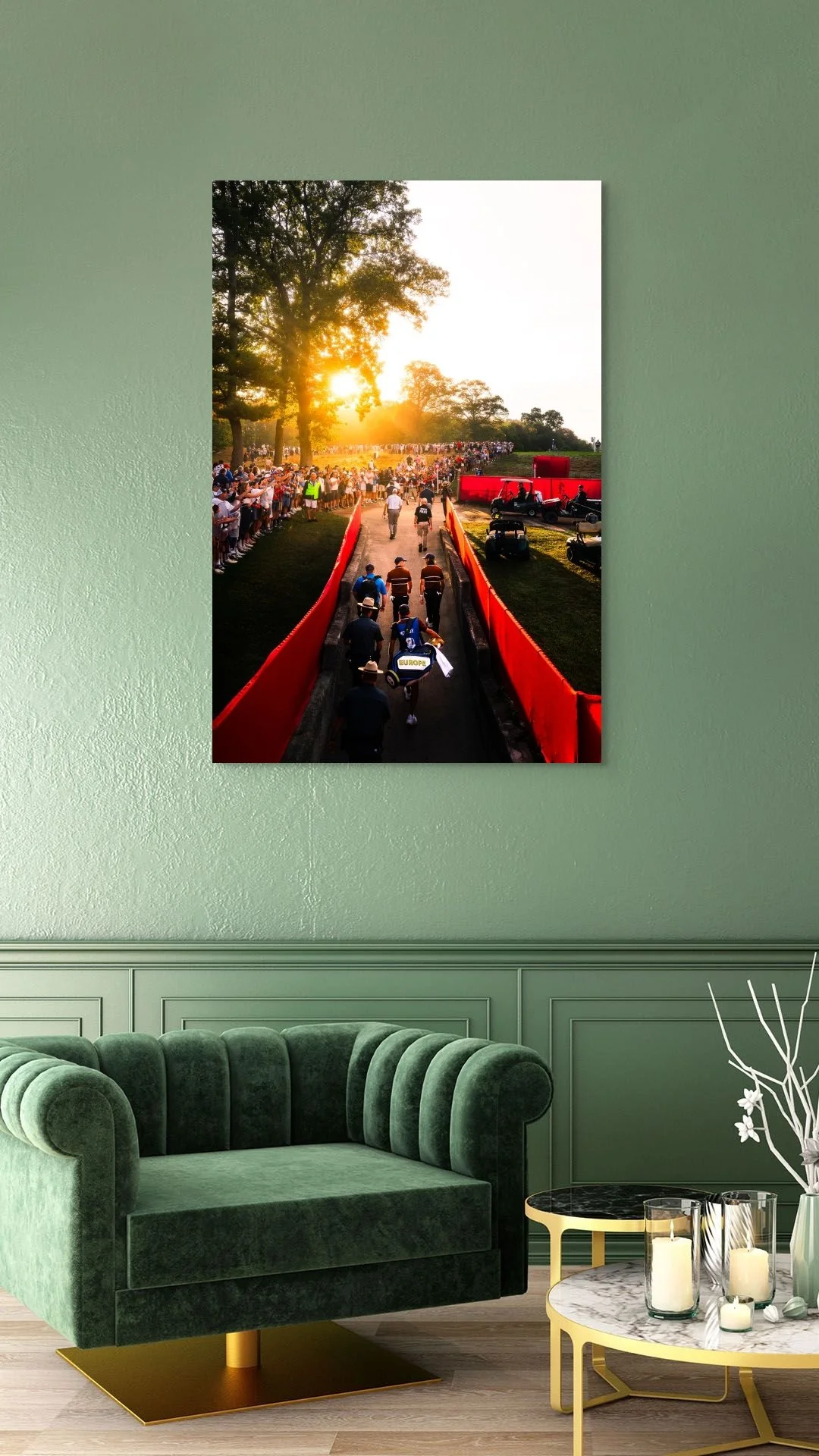 Image 2 of 4
 Image 3 of 4
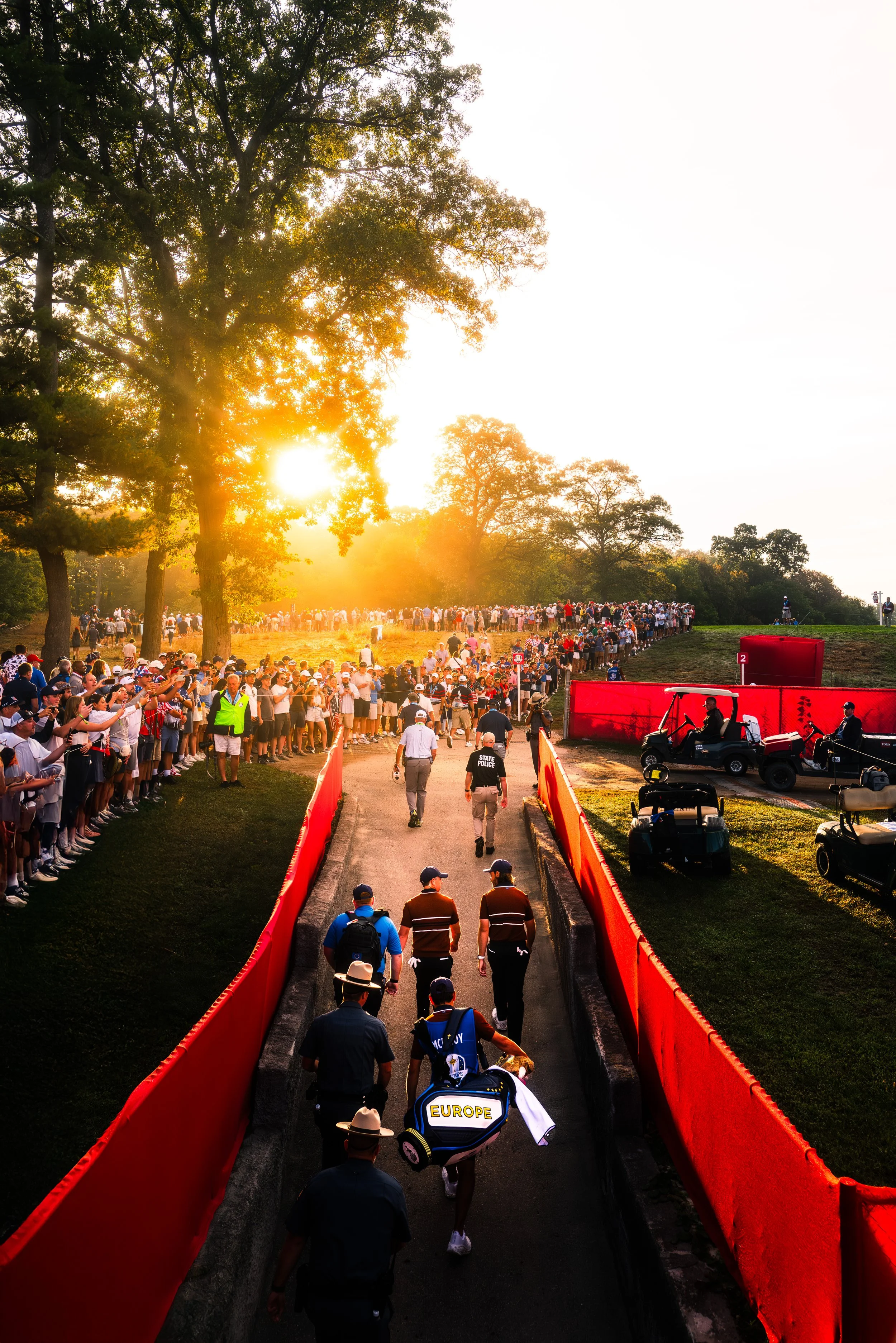 Image 4 of 4
Time
The trophy is not the destination. It is simply proof that someone loved the work more than the reward. More hours than anyone counted. More mornings than anyone witnessed. More swings taken in silence, for no one, for nothing — except the pursuit of something perfect. This image was made in a single moment. But it took a lifetime to earn.
TIME
A Story About the Image
There is a particular kind of morning that belongs only to golf.
The gallery ropes are still slack. The dew is still on. The world has not yet decided what kind of day it intends to be. And somewhere in the half-light, the greatest players alive are walking toward something — unhurried, certain, carrying the accumulated weight of everything they have ever given to the game.
Bethpage Black in the autumn of 2025 had that feeling from the first breath.
I did not arrive by courtesy car or press shuttle. My friend and I boarded a train in Maryland in the dark, rode it north to New York, took the Long Island Expressway out through Queens, and walked through a back gate at five-thirty in the morning. No credentials. No assignment. Just two men who understood, without having to say it, that you do not miss something like this.
We would walk 25,000 steps before the day was done. Thirty-six hours from the moment we left to the moment we returned. And I would not trade a single step.
I found my position early — at the cobblestone bridge near the first green, where the road runs between two worlds. On one side, the tunnel mouth, where players emerged from shadow into morning and climbed toward the second green. On the other, the first hole's final act, where putts were holed and the day's ledger began to fill. I paced between them like a man who could not choose between two good things. I called my son to tell him what I was seeing. I wanted him to know that his father was standing inside history.
The first group came through and I knew immediately that I had not made the photograph I was there to make. The light was not ready. The moment had not yet gathered itself.
So I waited.
This is what the game teaches, if you let it. Waiting is not passive. Waiting is the work.
When Rory McIlroy and Tommy Fleetwood came through the tunnel with the full procession of Team Europe behind them — the caddies, the captains, the quiet machinery of a side that knew exactly what it had come to do — the sun found a seam in the trees above the pathway.
What happened next was not dramatic in the way sport is usually dramatic. There was no roar. No scoreboard shift. Just light, arriving precisely where it was needed, laying a golden rim across two men who had spent their lives earning the right to walk the way they were walking.
I raised the camera.
The shutter opened and closed in a fraction of a second.
The photograph existed.
I have spent more hours than I will admit studying the swings of Rory McIlroy and Tommy Fleetwood — with considerably less to show for it than they have. But what has always arrested me is not the mechanics. It is the bearing. The way a man carries himself between shots tells you everything about what the game has asked of him and what he has chosen to give in return. There is no performance in how Rory walks. No theater. Only the quiet authority of someone who has stood on the range in the rain, in the dark, in the silence of a Tuesday when no one is watching, and answered the same question ten thousand times.
How much are you willing to give?
The answer, for both of them, has always been the same.
Everything.
That dedication does not announce itself. It accumulates — in the small hours, in the repetitions that no scorecard records, in the swings taken for no one, toward no particular reward, except the possibility of something more perfect than what came before. The trophy at the end is not the destination. It is simply what happens when a man loves the work more than he loves the winning.
Perfection is the pursuit. The pursuit is the point. These are not two different things.
Some weeks after the tournament concluded, I wrote to the people who care for Bethpage Black and told them that I believed I had made a photograph that belonged in their clubhouse.
They agreed.
It now hangs in the Ryder Cup championship display at the front of that great clubhouse — beside the Bethpage Replica trophy itself, beside the signed team bag, beside the artifacts that will tell the story of that October to golfers not yet born. Every member who walks through that door will pass it. Every visitor who makes the pilgrimage to one of American golf's most demanding and beloved grounds will see it.
One day I will bring my children there to play. They will glance at it on the wall and think it is reasonably interesting. Then they will ask for ice cream or a new ball marker and we will move on. That is exactly as it should be.
This is what I know about time, after all the miles and all the years.
It does not accumulate the way money does, or reputation, or distance on a rangefinder. It moves in one direction only, and it does not slow for sentiment. The photograph taken ten minutes before this one is a different photograph entirely. The light was somewhere else. The men had not yet rounded the corner. The moment had not yet decided to become what it became.
But then the sun broke the morning trees and Tommy and Rory looked at eachohter….. it’s that teammate connection in the golf game that means something…. Just walking the course with your boys…..
You cannot manufacture that convergence. You can only be present for it — awake, patient, positioned, ready. And if you have given enough of yourself to the work of seeing, the moment will eventually arrive and you will recognize it.
When it does, the light will be perfect.
This print is produced on museum archival paper and released as a strictly limited edition.
20 · 8×10 — $250 · 15 · 10×13 — $600 · 5 · 16×20 — $900 · 2 · 24×36 — $1,250
40×50 and larger available via custom order starting at $2,500 — inquire directly.
Once they're gone, they're gone.
Time doesn't wait. Neither should you.
The trophy is not the destination. It is simply proof that someone loved the work more than the reward. More hours than anyone counted. More mornings than anyone witnessed. More swings taken in silence, for no one, for nothing — except the pursuit of something perfect. This image was made in a single moment. But it took a lifetime to earn.
TIME
A Story About the Image
There is a particular kind of morning that belongs only to golf.
The gallery ropes are still slack. The dew is still on. The world has not yet decided what kind of day it intends to be. And somewhere in the half-light, the greatest players alive are walking toward something — unhurried, certain, carrying the accumulated weight of everything they have ever given to the game.
Bethpage Black in the autumn of 2025 had that feeling from the first breath.
I did not arrive by courtesy car or press shuttle. My friend and I boarded a train in Maryland in the dark, rode it north to New York, took the Long Island Expressway out through Queens, and walked through a back gate at five-thirty in the morning. No credentials. No assignment. Just two men who understood, without having to say it, that you do not miss something like this.
We would walk 25,000 steps before the day was done. Thirty-six hours from the moment we left to the moment we returned. And I would not trade a single step.
I found my position early — at the cobblestone bridge near the first green, where the road runs between two worlds. On one side, the tunnel mouth, where players emerged from shadow into morning and climbed toward the second green. On the other, the first hole's final act, where putts were holed and the day's ledger began to fill. I paced between them like a man who could not choose between two good things. I called my son to tell him what I was seeing. I wanted him to know that his father was standing inside history.
The first group came through and I knew immediately that I had not made the photograph I was there to make. The light was not ready. The moment had not yet gathered itself.
So I waited.
This is what the game teaches, if you let it. Waiting is not passive. Waiting is the work.
When Rory McIlroy and Tommy Fleetwood came through the tunnel with the full procession of Team Europe behind them — the caddies, the captains, the quiet machinery of a side that knew exactly what it had come to do — the sun found a seam in the trees above the pathway.
What happened next was not dramatic in the way sport is usually dramatic. There was no roar. No scoreboard shift. Just light, arriving precisely where it was needed, laying a golden rim across two men who had spent their lives earning the right to walk the way they were walking.
I raised the camera.
The shutter opened and closed in a fraction of a second.
The photograph existed.
I have spent more hours than I will admit studying the swings of Rory McIlroy and Tommy Fleetwood — with considerably less to show for it than they have. But what has always arrested me is not the mechanics. It is the bearing. The way a man carries himself between shots tells you everything about what the game has asked of him and what he has chosen to give in return. There is no performance in how Rory walks. No theater. Only the quiet authority of someone who has stood on the range in the rain, in the dark, in the silence of a Tuesday when no one is watching, and answered the same question ten thousand times.
How much are you willing to give?
The answer, for both of them, has always been the same.
Everything.
That dedication does not announce itself. It accumulates — in the small hours, in the repetitions that no scorecard records, in the swings taken for no one, toward no particular reward, except the possibility of something more perfect than what came before. The trophy at the end is not the destination. It is simply what happens when a man loves the work more than he loves the winning.
Perfection is the pursuit. The pursuit is the point. These are not two different things.
Some weeks after the tournament concluded, I wrote to the people who care for Bethpage Black and told them that I believed I had made a photograph that belonged in their clubhouse.
They agreed.
It now hangs in the Ryder Cup championship display at the front of that great clubhouse — beside the Bethpage Replica trophy itself, beside the signed team bag, beside the artifacts that will tell the story of that October to golfers not yet born. Every member who walks through that door will pass it. Every visitor who makes the pilgrimage to one of American golf's most demanding and beloved grounds will see it.
One day I will bring my children there to play. They will glance at it on the wall and think it is reasonably interesting. Then they will ask for ice cream or a new ball marker and we will move on. That is exactly as it should be.
This is what I know about time, after all the miles and all the years.
It does not accumulate the way money does, or reputation, or distance on a rangefinder. It moves in one direction only, and it does not slow for sentiment. The photograph taken ten minutes before this one is a different photograph entirely. The light was somewhere else. The men had not yet rounded the corner. The moment had not yet decided to become what it became.
But then the sun broke the morning trees and Tommy and Rory looked at eachohter….. it’s that teammate connection in the golf game that means something…. Just walking the course with your boys…..
You cannot manufacture that convergence. You can only be present for it — awake, patient, positioned, ready. And if you have given enough of yourself to the work of seeing, the moment will eventually arrive and you will recognize it.
When it does, the light will be perfect.
This print is produced on museum archival paper and released as a strictly limited edition.
20 · 8×10 — $250 · 15 · 10×13 — $600 · 5 · 16×20 — $900 · 2 · 24×36 — $1,250
40×50 and larger available via custom order starting at $2,500 — inquire directly.
Once they're gone, they're gone.
Time doesn't wait. Neither should you.